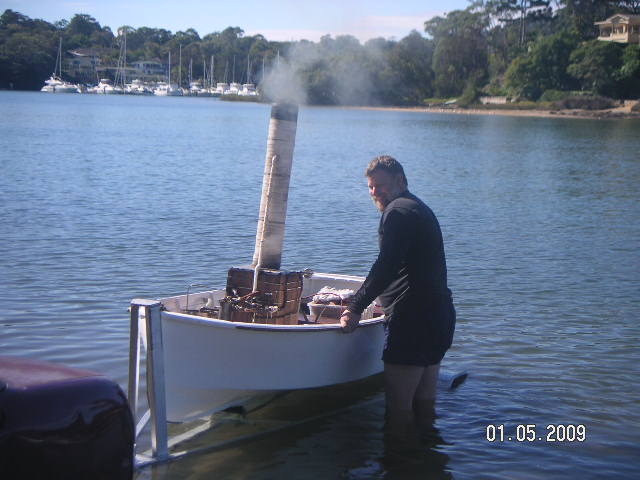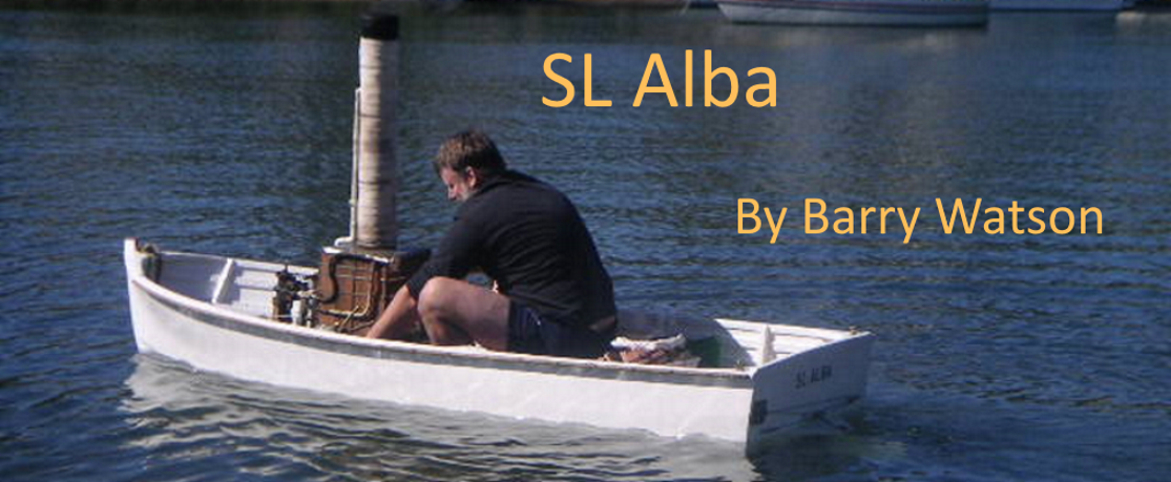
Having been a steam buff as long as I can remember and also having a passion for boats and engineering, putting a steam launch together has been a goal of mine for years. I am a Toolmaker by trade and have studied Mechanical Engineering at diploma level after finishing my trade. Having built many model steam boats and the odd train over the years, as well as several high speed RC model launches and a tethered hydroplane to the British A Steam class, I felt quite confident of building a small wood fired mono-tube boiler and engine to suit. All I needed was a suitable hull. I have owned several trailer sailors, and struggling to launch a large boat is a pain if on your own, so decided that small was best for my usage. Having recently renovated my home adding a large double garage and already possessing a fully equipped engineering workshop, I set to work on a project that no married man with children should attempt alone, none the less there are only the brave and the boat-less!
The hull was donated by a friend. It was originally a rowing skiff and dates from about 1910. Constructed of Tee tree frames and grown knees with a Spotted Gum keel with Pacific Maple planking. Originally she was fully copper riveted with nearly 2000 rivets in total. Several planks needed replacing as they had white ant damage from storage under a house for 50 years, fortunately the white lead used to seal the thin 3/8 planks and scum battens stopped the buggers in there tracks, in the end only the 2 sheer planks and 3 garboard planks were replaced. I decided that the best way to bring the hull up to maximum strength was to epoxy encapsulate it.
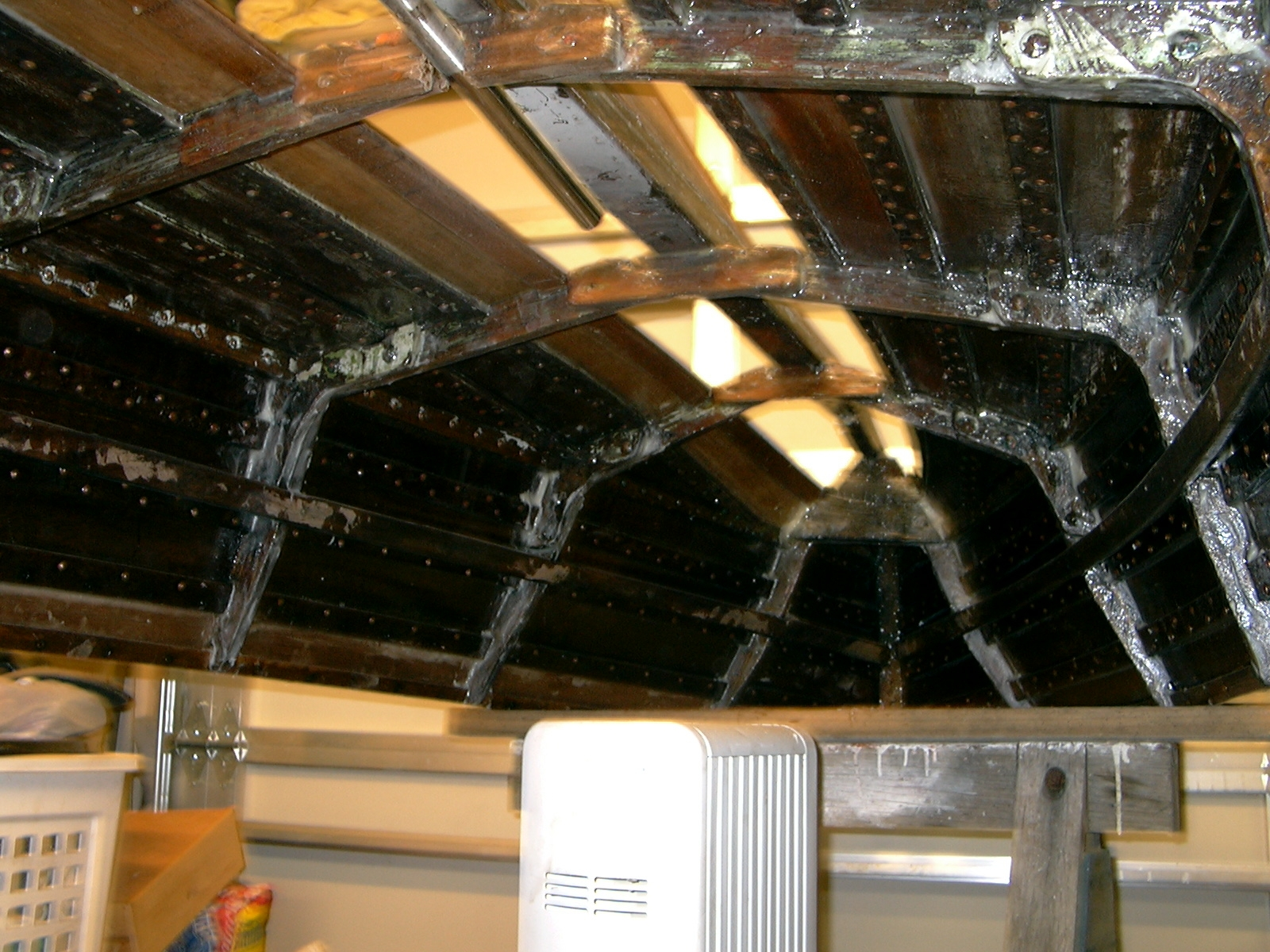
This process filled all the nail weary rivet holes and bonded all the frames stringers and battens into one solid and very stiff hull. To finish the outside I used epoxy and filler to get rid of most but not all of the cupping in the planks followed by high build 2 pack sanding undercoat followed by 2 pack epoxy enamel. Both high build primer and top coat were from Dulux. Durepon sanding sealer and Luxathane R are both are very reasonably priced and the end result was very pleasing with that nice 2 pack gloss finish but still allowing the planking to be seen. The inside was as the outside but minus the epoxy filler coats.
Floor boards are Australian Cedar and are clear finished in International Perfection Varnish as are the thwarts which both have water tanks under them for and aft trimming as well as feed water.
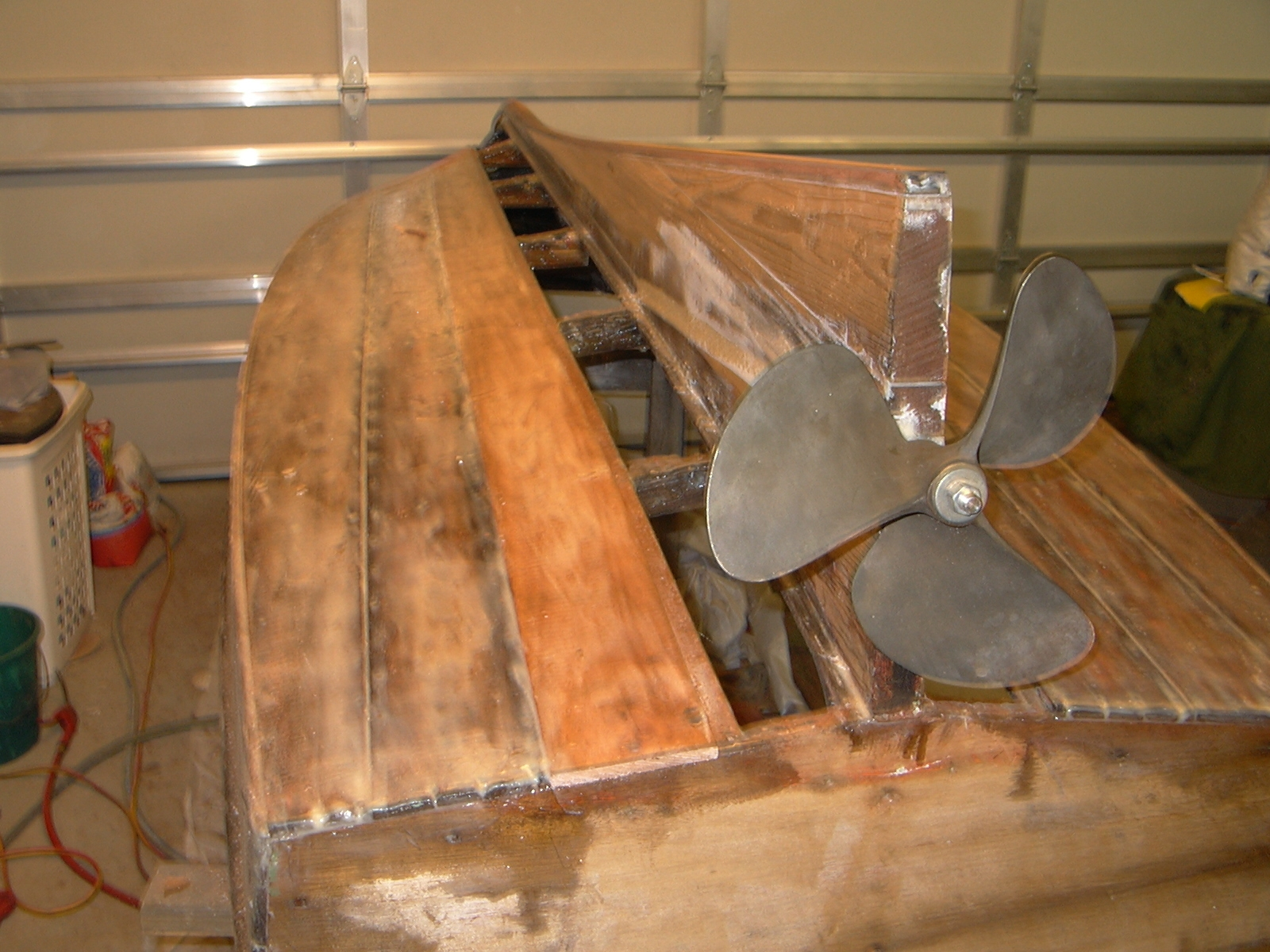
I added enough depth to the keel aft to accommodate a 12inch diameter by 14 inch pitch 3 bladed propeller from a 1930 clinker ski-boat. The prop shaft is 3/4 inch stainless turned down to 5/8 inch between the inboard and stern bearings which are phosphor bronze with grease groves and nipples. The shaft is enclosed in a 1 1/8 diameter by 1/16 wall stainless steel tube epoxied in situ with the Cedar and Spotted Gum keel extension. A a brass stuffing box seals the inboard end and prop end thrust is taken by Delrin washers.
General dimensions are 10ft LOA 9ft 6in LWL, 3ft 6 in max beam and 3ft WLB. Draft is about 16 in unloaded.
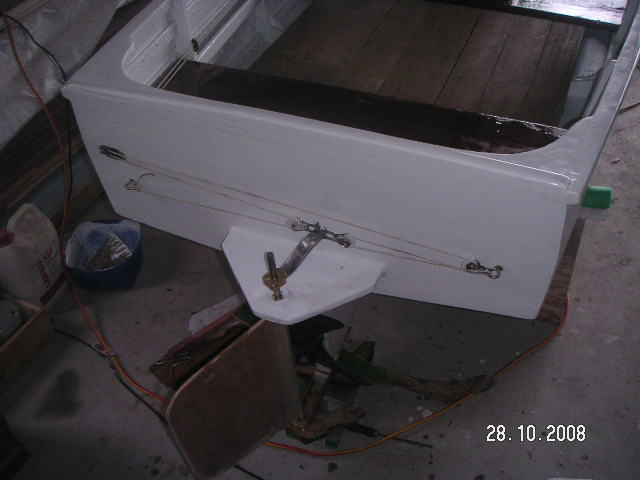
Steering is wheel via cable to an outboard hung rudder.
 Engine is 1 1/2 in bore 2 in stroke slide valve with circular crosshead of my own design. Construction is all built up mainly from bronze and brass with cast iron cylinder, piston and valve parts.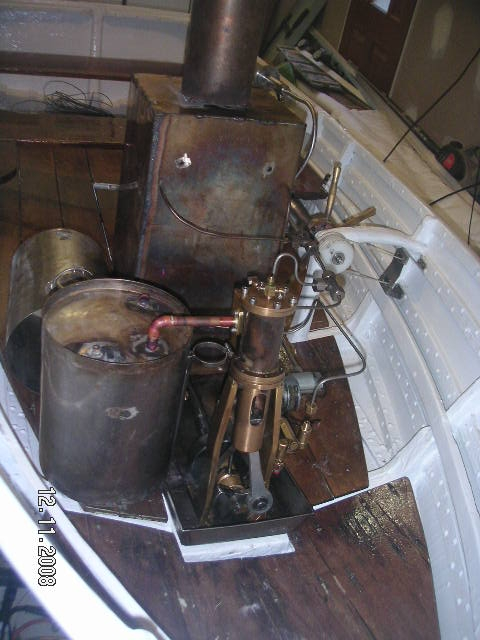
Internal lubrication is by hydrostatic lubricator using synthetic 300 weight slide oil blended with 10% by weight beef tallow. External Lubrication is outboard gearbox oil as it does not absorb water delivered straight from the plastic sauce bottle type nozzle. The flywheel is fairly small as the engine has a large counterweight to help balance.
The engine has been run up to 1500rpm with little vibration but in operation 350 to 400rmp is more than enough for the small hull and gives a GPS confirmed speed of 4.2 knots at 400rpm and 3.9 knots at 350rpm. The coupling to the prop shaft is a simple ball and pin in a slotted tube all case hardened and a short length of bicycle inner tube seals in the grease.
An interesting part of the setup is the method of throttling the steam supply. As mono- tube generators are notorious for their inability to supply steam at a steady pressure and volume I decided that producing more steam than necessary and bypassing the excess steam via an adjustable relief valve that dumped into the oil and water separator before being feed up the stack so to speak might work well. Testing followed and it worked a treat as long as the steam does not get too hot and anneal the spring. The mechanism can be seen on the wheel side top of the boiler casing (below).
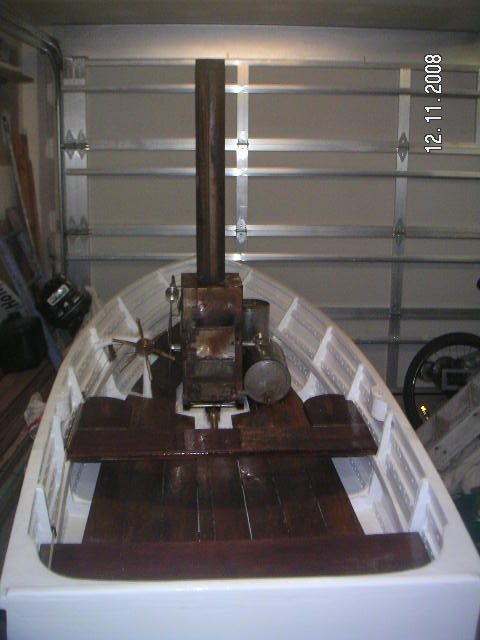
The boiler is a mono-tube type and uses 6 meters of 6.35mm OD 0.7 mm wall seamless drawn Stainless Steel tube at the water pump end, welded to 6 meters of 5mm OD 0.7 wall Stainless Steel tube ending at the steam chest. The tube is bent as below. I have found that chaos is good when it comes to heat transfer.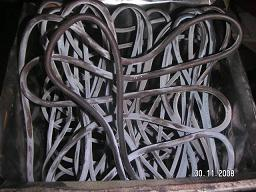
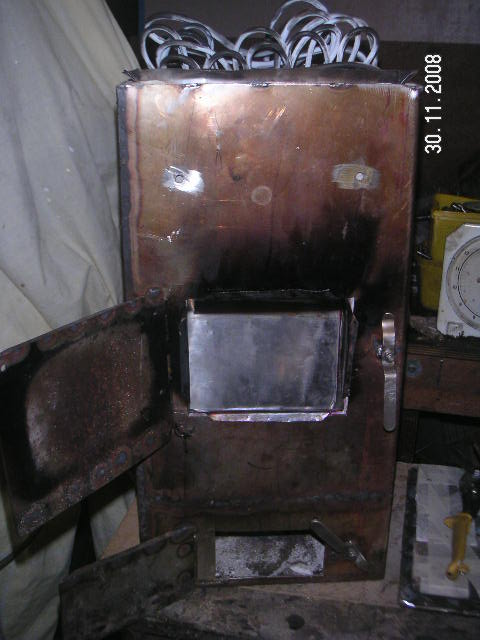
The housing is 10 inches square on the outside and is of 1/32 stainless steel with 10 mm refractory board rated at 1200 degrees C on the inside, this is covered .010 inch stainless steel shim bolted though. External lagging is ceramic furnace blanket 1 inch thick with hard wood covering. This has proved vulnerable to catching fire and has been replaced by 2 inch ceramic blanket covered with high temp fiberglass exhaust bandage.
The grate is 8 inches square and about 40% is air space. The coils are held in place by 5/16 inch diameter stainless tube passing though the shell and riveted to allow disassembly. The Fire box and ash doors are both simple doors a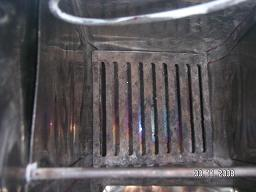
 I chose to power the water pump by electric motor to allow for some simple form of steam temperature control. That is an "electronic pulse width modulation speed controller" as the primary manual control and a thermostat from an old electric frying pan. I mounted this to a copper block clamped to the steam pipe were it exits the boiler casing. This has just the right temp range and is a "by metal strip" type so very robust. This thermostat is set so that if the steam temp goes over 300 degrees C the feed pump motor increases speed to maximum until the temperature of the steam drops.
Fuel is mainly seasoned hardwood though I have used anthracitic coal in the form of barbeque beads.
Pump is 4mm dia by 20mm stroke with 5mm stainless steel balls and all bronze pump and valve bodies. It is driven by a motor and gearbox that came from a 12v car tyre pump which has nice crank shaft and big end ready made for the job.
Water tanks hold about 30 litres each. The stern tank is used for solo or light passengers and center tank for full load of (believe it or not) 4 passengers.