15th March 2025 - More plumbing or Final Assembly?
15th March 2025 - More plumbing or Final Assembly?
Having worked on the plumbing for the whistle and the feed water heater it was time to add back the insulation protection panels and the insulation. Of course this involved undoing the whistle and feedwater pipe to work out where there needed to be holes in the insulation protection sheets. This would no doubt horrify professional plumbers and boiler builders, but the whole process was one of trial and error. Whilst some of the pipe routes made sense in one's head, in practice some turned out to be awkward and needed re-thinking.
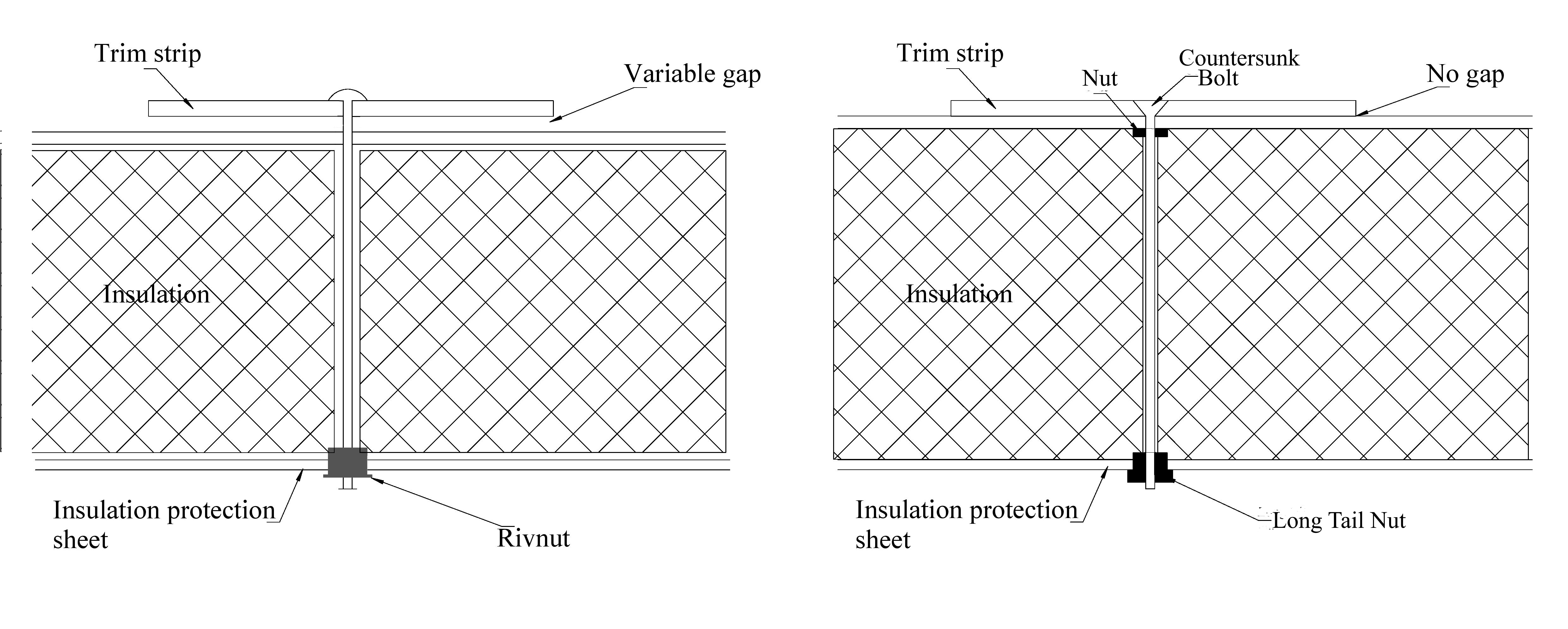
The top panel of the boiler was addressed first as it was felt that it would be simplest. Simple is not really the right word because at the same time the brass trim strips were being added. The original plan had been to have carefully aligned rivnuts in the insulation protection panels that would be engaged with 30mm X M3 stainless domed bolts. That it was felt would be easy to fit and allow the insulation to avoid compression. However, the trim strips initially used the same bolts, being on top of the panel, and it was soon found that the bolts were not holding down the trim if something compressed the insulation. In the end it was decided to swop the stainess bolts for countersunk brass. The trim strips were then countersunk so that the bolt heads laid flush and then brass nuts were added under the top panel to secure the bolt and the trim. That was a good solution to one problem but it threw up another. Since the brass bolts were now fixed and could not (should not) rotate there was no way to engage the rivnuts in the insulation protection panel.
It eventually became clear that the only solution was going to be to remove the rivnuts and replace them with some sort of nut. Since the aim of the process was to compress the insulation as little as possible it was decided that a nut with a 'tail' was probably the answer. Thus some hex brass rod was acquired of sufficient size that it was possible to turn it down to the diameter of the removed Rivnut hole (Xmm). It was then drilled for tapping M3 and cut off to give a length of hex bar the thickness of a typical nut. The hole in the centre was then tapped M3.
 |