20th June 2026 - Batteries and their management
20th June 2026 - Batteries and their management
A reasonably long discussion with Deep Seek considered how much power the pump might use over a two hour cruise and also have sufficient surplus to avoid 'range anxiety'. The result was the following table for power consumption.
Pump Power vs. Flow (Typical for a positive displacement pump)
| Flow Rate (L/min) | Pump Power (W) | Current at 21V (A) | 2-Hour Energy (Wh) |
|---|---|---|---|
| 0.38 (engine demand) | ~35 W | ~1.7 A | 70 Wh |
| 0.50 (likely operating point) | ~45 W | ~2.1 A | 90 Wh |
| 0.75 (max safe continuous) | ~65 W | ~3.1 A | 130 Wh |
| 2.80 (pump full flow) | ~200 W | ~9.5 A | 400 Wh |
Using 0.5-0.6 L/min as the realistic operating figure for pumping water into the coil gives 90-110 Wh for 2 hours. Next came the issue of deciding upon the size of battery that would deliver the required 90-110Wh. Batteries tend to be advertised with their voltage and their power expressed in Ah. Not being an expert at converting Wh to Ah as mental arithmetic it seemed sensible to get a table for all the potentially suitable batteries and list all the associated variables.
Summary Table
| Battery | Energy (Wh) | Runtime at 0.5 L/min | Weight | Adapter Needed | Cost (approx) | Recommendation |
|---|---|---|---|---|---|---|
| Generic 21V 4Ah | 84 Wh | ~1.5 hours | 0.5 kg | No | £25-35 | ❌ Insufficient |
| Generic 21V 6Ah | 126 Wh | ~2.5 hours | 0.7 kg | No | £35-50 | ✅ Good |
| Generic 21V 8Ah | 168 Wh | ~3.0 hours | 0.9 kg | No | £45-60 | ✅ Best |
| Generic 21V 12Ah | 252 Wh | ~4.5 hours | 1.3 kg | No | £70-90 | ✅ Overkill but fine |
| 20V tool battery (6Ah) | ~108 Wh | ~2.0 hours | 0.7 kg | Yes (£15-25) | £50-70 + adapter | ⚠️ More complex |
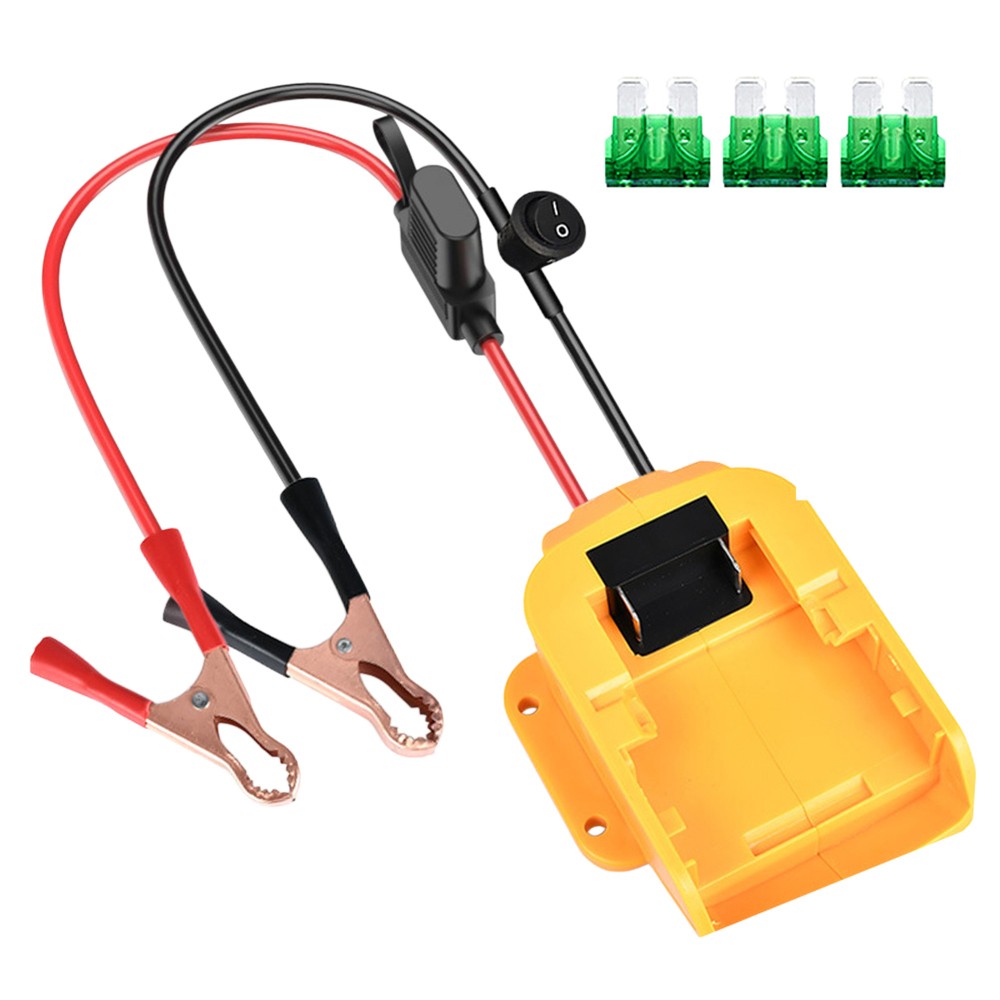
Considerable time was spent doing online research into vendors of 21V 8Ah batteries. The main problem was that UK vendors just do not stock that combination. Dropping into AliExpress the picture changed and there were plenty of batteries advertised to that specification but they were all offered as power tool upgrade or replacement batteries. This family has electrified bikes that use Bosch 36v 6Ah batteries for their power assistance. For that to work, the firm that did the upgrade had designed a custom 'shoe' to clip onto the battery and connect with the power terminals. The power tool batteries on AliExpress looked as if they would need a special shoe designing and fabricating before they would become usable. Fortunately Internet serendipity led to finding the search term 'Power Wheel Battery Adapter' which are adapters or shoes that seem to come with two rats tails or perhaps a lead with a plug and fit into power tool batteries. With that search term it was discovered that such adapters are everywhere.
 |
Having found that there is no shortage of battery adapter shoes the next decision was to choose between a well known brand or a generic battery. The decision was made slightly easier by Deep Seek proposing that the branded battery and charger could probably be easily UK sourced and would probably contain higher quality battery components. Back on the Internet it seemed that UK sourcing might be more difficult than expected whereas AliExpress offered a huge range of both branded and generic batteries. Seeking 21V and 8 Ah kept leading to 20V 9Ah real DeWalt and DeWalt clones. Both also claimed that the batteries were 20V and 60V which seemed odd. However, further research identified that these batteries can sense 60V tools and automatically re-adjust the voltage. To narrow the huge range of vendors down it was decided that the offer must include a battery charger. It was anticipated that a UK plug version would be unlikely but an EU version would do as that is to the same voltage standard. Setting this decision criterion shortened the list to almost nothing. However, a Dewalt branded 20V 9Ah pack of two batteries and an EU charger was found. Further searching yielded nothing better so the order was placed. The cost at June 2026 was £82 with 'free' shipping.
 |
With that decision made a battery shoe connector was found that would fit the chosen battery. Usefully that device comes with fuse holder on the red cable and 3 X 30A fuses are included. Given the likely loads, perhaps a lower amperage fuse might be better.
 |
Having lined up the purchase of the battery and its connector the next step was to source the device that would allow the skipper to set a pump rate and also let the computer adjust the flow to meet the needs of the coil.
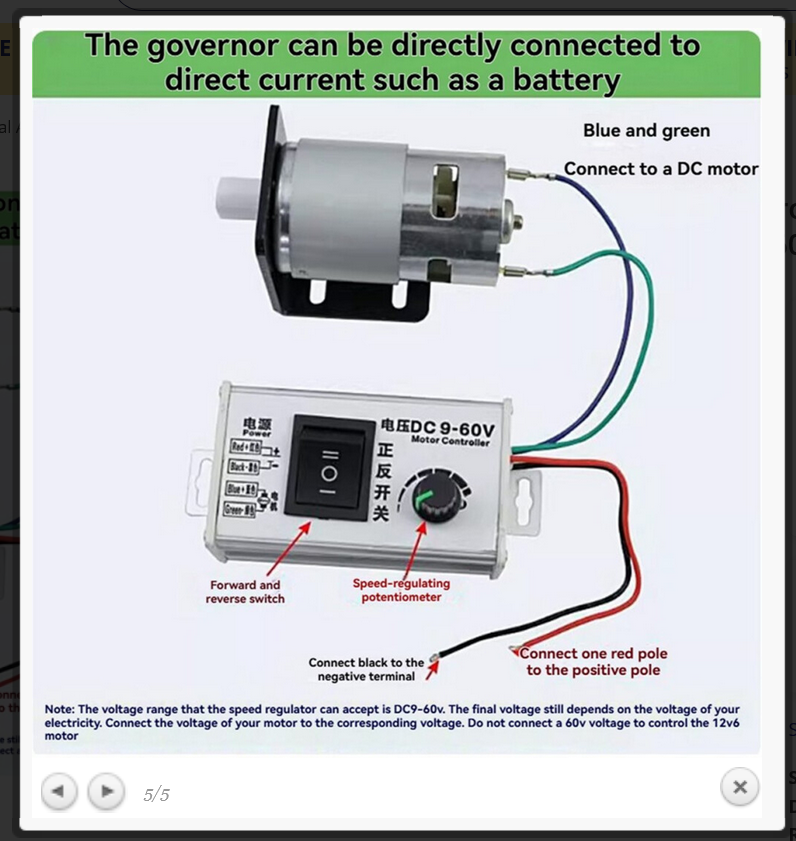
The advice that was received was to employ a Pulse Width Modulator (PWM) which adjusts the speed of the motor by sending power in pulses. The bigger the pulse the faster the motor will spin. Lacking any experience of such devices it seemed sensible to run an Internet search and find out what was available. The answer was 'a great many' in all shapes and sizes. Usefully, Deep Seek offer the following advice on the key specifications, which are typical for this class of controller (See below).
With that advice the task of choosing a device was simplified and narrowed down to one in a robust looking aluminium case and a nice looking adjustment knob. An order for that was soon placed and it was simply a case of waiting for all the components to arrive from China.
| Feature | Common Specification | Why It Matters for This Project |
|---|---|---|
| Input Voltage | 9V - 60V DC | This covers the voltages you want to test (e.g., 7V, 12V, 21V). Check that the unit you choose supports 7V, as some have a minimum of 9V or 10V . |
| Continuous Current | 16A - 18A | This is well above your pump's likely draw (~2-5A), giving you a comfortable safety margin. |
| Control | Potentiometer (knob) | This allows you to smoothly and precisely adjust the pump speed from 0% to 100%. |
| Safety Features | Often includes reverse polarity protection and may have a fuse | Reverse polarity protection is a great feature; it prevents damage if you accidentally wire it backwards. |